Clinically verified
The content of this article has been verified by the specialist team of the Sztuka Harmonii Psychological Centre.
Is Neurofeedback Safe? Facts and Myths About Side Effects
When it comes to a method that affects brain activity, questions about safety are natural. Parents considering neurofeedback for their child, adults with ADHD or insomnia, athletes seeking mental training - everyone wants to know: can this cause harm? On the internet, both enthusiastic descriptions of miraculous effects and alarmist articles about dangers circulate. The truth, as always, lies in the facts - and these are available in the scientific literature.
How Does Neurofeedback Affect the Brain?
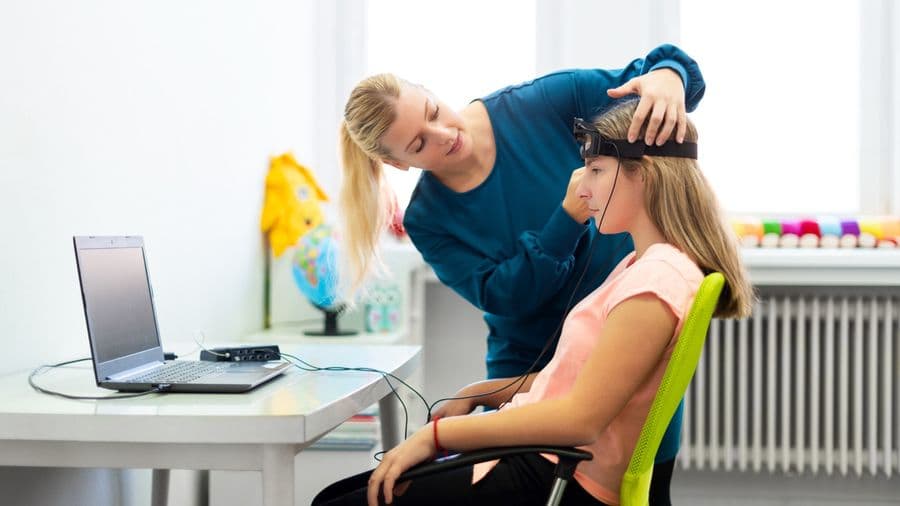
Let us begin with a fundamental fact that should dispel the greatest concerns: neurofeedback does not send any impulses to the brain. Electrodes placed on the head exclusively read the EEG signal - just as a thermometer reads temperature without changing it. The brain learns new patterns based on the feedback it sees on the screen. This is learning - not stimulation.
This is a key distinction, because methods exist that actually stimulate the brain from the outside: transcranial direct current stimulation (tDCS), transcranial magnetic stimulation (TMS), and electroconvulsive therapy (ECT). These methods send energy to the brain and have their own risk profiles. Neurofeedback does not belong to this category. It is a training method, not a stimulation method.
What Does the Research Say About Safety?
Neurofeedback has been used clinically since the 1960s - that is over 60 years of experience. During this time, hundreds of clinical studies have been conducted involving thousands of participants. None of them has demonstrated serious, permanent side effects.
The systematic review by Micoulaud-Franchi and colleagues from 2014, published in Epilepsy and Behavior, analyzed the safety profile of neurofeedback based on available literature. The conclusion: neurofeedback is a low-risk method, and reported adverse effects are transient and mild in nature.
Hammond and Kirk from 2008, in a review published in Applied Psychophysiology and Biofeedback, indicated that neurofeedback has a safety profile comparable to other forms of behavioral learning - meaning it is as safe as learning to play the piano or meditation training.
It should be noted, however, that the absence of serious side effects in studies does not mean that neurofeedback is a completely risk-free method. It means that the risk is very low, and any adverse effects are transient and reversible.
What Transient Effects May Occur?
Some patients experience mild, short-lived effects after neurofeedback sessions. These are comparable to the body's reaction to intense physical training - fatigue after the gym does not mean the gym is harmful. The most commonly reported transient effects include fatigue after a session. This is the most common effect, particularly during the first sessions. A brain that is intensely working on a new pattern consumes energy - hence the feeling of fatigue. It passes within a few hours and usually subsides as therapy progresses.
Occasionally, a brief headache appears. A mild headache after a session occurs in some patients, particularly at the beginning of therapy. It may be related to muscle tension (sitting in one position) or to the learning process itself. It resolves spontaneously within a few hours.
Sometimes patients report changes in sleep quality. During the first sessions - paradoxically - sleep may be temporarily lighter or different than usual. This is a normal adaptive reaction of the brain, which is reorganizing its patterns. As therapy progresses, sleep improves.
Sporadically, irritability or arousal occurs. Some patients after sessions strengthening beta (fast waves) may experience temporary arousal or irritability. This is a signal to the therapist that the training parameters need adjustment - for example, reducing intensity or changing the frequency band.
When Can Side Effects Be Stronger?
The risk of adverse effects increases in two situations: when therapy is conducted by an incompetent person and when the protocol is improperly selected. Neurofeedback is not a matter of pressing one button. The training protocol - meaning which waves we strengthen, which we suppress, at what location on the head and with what intensity - must be matched to the patient's individual EEG profile.
If the protocol is poorly selected - for example, we strengthen beta waves in a person who already has too many (which occurs with anxiety) - we can temporarily intensify symptoms. This is not permanent brain damage. It is like an improperly selected exercise at the gym - it may cause discomfort but not permanent injury, provided we correct the error.
That is why choosing a qualified specialist who understands neurophysiology, can interpret EEG recordings, and flexibly adjust the protocol during therapy is so important. Well-conducted neurofeedback has a marginal risk profile.
Popular Myths About Neurofeedback
Myth 1: Neurofeedback can cause epileptic seizures. Fact: there is no evidence that neurofeedback induces seizures in healthy individuals. Moreover, neurofeedback is sometimes used in patients with epilepsy as a supportive method - Sterman's research from the 1970s demonstrated that SMR training reduced seizure frequency.
Myth 2: Neurofeedback makes the brain dependent on external stimulation. Fact: neurofeedback does not stimulate the brain from the outside. It teaches self-regulation. After therapy ends, the brain uses the learned patterns independently - just as after learning to ride a bicycle, you do not need an instructor.
Myth 3: The effects of neurofeedback are irreversible and can change personality. Fact: neurofeedback does not change personality. It trains specific brainwave patterns associated with attention, sleep, mood, or arousal levels. Personality - one's value system, temperament, way of being - remains unchanged. Patients after therapy feel more like themselves, not different.
Myth 4: Neurofeedback is dangerous for children. Fact: children are one of the most frequently studied populations in the context of neurofeedback (mainly due to ADHD). Hundreds of studies involving thousands of children have not demonstrated serious side effects. The plasticity of a child's brain means it responds to training faster and often with better results than an adult brain.
Myth 5: Neurofeedback can replace all other forms of therapy. Fact: neurofeedback is a valuable method, but it is not a panacea. The best results come in combination with other forms of support - psychotherapy, psychoeducation, and in justified cases, pharmacotherapy. Suspicion toward a center that promises neurofeedback will cure everything is warranted.
Contraindications - When Is Neurofeedback Not Indicated?
Absolute contraindications to neurofeedback are very few. The method is safe for the vast majority of individuals. However, caution should be exercised in several situations. Active psychosis (acute schizophrenic states) - in this state, working with brain activity requires particular caution and should occur only under psychiatric supervision. Uncontrolled epilepsy - neurofeedback is sometimes used in patients with epilepsy, but this requires an experienced therapist and close collaboration with a neurologist. Open wounds on the scalp - a purely practical limitation related to electrode placement. Severe personality disorders in a decompensation phase - not because of neurofeedback safety concerns, but because such an individual may require a different form of help as a priority.
In cases of doubt, the therapist should consult with the patient's attending physician. Good practice is collaboration between specialists - not making decisions in isolation.
Neurofeedback and Children - Safety in a Special Population
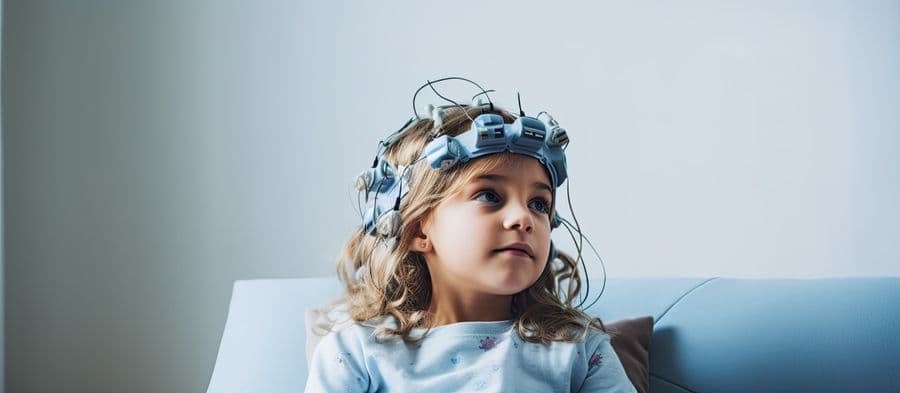
Parents are naturally more cautious when it comes to methods used on their children. In the context of neurofeedback, this caution is understandable, but scientific data should provide reassurance. Children are one of the most frequently studied populations in neurofeedback - mainly due to ADHD. Hundreds of studies involving thousands of children aged 6 to 17 have not demonstrated serious side effects. The safety profile in children is comparable to that in adults - the same mild, transient effects: temporary fatigue after a session, occasional headache.
The plasticity of a child's brain - the same quality that causes children to learn languages, musical instruments, and new skills faster - also means their brain responds to neurofeedback more quickly. This is both an advantage (faster results) and a reason why therapist competence matters. A poorly selected protocol - for example, excessively aggressive beta wave strengthening in an overly aroused child - can temporarily increase arousal. An experienced therapist will recognize this after the first sessions and correct the parameters.
How to Recognize That Therapy Is Proceeding Correctly?
Several indicators suggest that neurofeedback is being conducted properly and safely. The therapist regularly asks about well-being - before the session, after the session, between sessions. If nobody asks how you feel, it signals that monitoring is insufficient. Training parameters are adjusted during the cycle - a good therapist does not use one setting from the first to the last session. As progress is made, they change difficulty thresholds, modify frequency bands, and correct electrode locations.
A review takes place every 10 sessions - the therapist discusses observed changes with the patient (or parents of the child), compares EEG data with initial readings, and establishes a plan for subsequent sessions. The therapist is open to questions and concerns - they do not trivialize patient concerns or react defensively to questions about qualifications or effectiveness. If after 15-20 sessions there is no improvement, the therapist proposes protocol revision or honestly says that in this case neurofeedback may not be the optimal method. This demonstrates professionalism, not failure.
Neurofeedback in the Context of Other Forms of Therapy
Neurofeedback should rarely be the sole intervention. In most cases, the best results come from combining it with other forms of support. For depression: neurofeedback plus psychotherapy (CBT or schema therapy) plus possibly pharmacotherapy. For ADHD: neurofeedback plus ADHD coaching plus psychoeducation. For insomnia: neurofeedback plus sleep hygiene plus cognitive behavioral therapy for insomnia (CBT-I). For anxiety: neurofeedback plus psychotherapy plus relaxation techniques (diaphragmatic breathing, progressive muscle relaxation).
A practice that offers neurofeedback as the only available method and has no ability to refer patients for other forms of support is limited. A center with a team of specialists - psychologists, therapists, diagnosticians - can offer an integrated therapeutic plan in which neurofeedback is one element, not the whole.
Safe Neurofeedback at Sztuka Harmonii
At Sztuka Harmonii Psychological Center in Gdansk, patient safety is a priority. Magdalena Raba, MA, conducts every initial consultation personally, assessing whether neurofeedback is appropriate for the given situation. Malgorzata Kozlowska, MA, a psychotraumatologist, collaborates in cases where the patient's difficulties have a traumatic background and require particular caution in method selection. Every training protocol is individually selected based on the history and EEG analysis, and during the cycle we regularly verify progress and correct parameters.
If you have questions about the safety of neurofeedback or want to learn whether this method is appropriate for your situation - call 732 059 980. We will answer honestly and without promises we cannot keep. Because reliable information is the foundation upon which we build trust.