Clinically verified
The content of this article has been verified by the specialist team of the Sztuka Harmonii Psychological Centre.
Neurofeedback in ADHD Therapy - Does It Really Help?
ADHD - Attention Deficit Hyperactivity Disorder - is one of the most common neurodevelopmental disorders. It affects approximately 5-7% of children and 2-5% of adults worldwide. Standard treatment is pharmacotherapy (methylphenidate, atomoxetine) combined with behavioral therapy. Medications work quickly and effectively in most patients, but not in all. Some individuals do not tolerate the side effects, some seek alternatives, and many parents are uneasy about the prospect of giving their child medication for years. It is precisely in this context that questions about neurofeedback arise with increasing frequency.
Why Does the ADHD Brain Respond to Neurofeedback?
EEG studies of individuals with ADHD consistently reveal characteristic deviations in bioelectrical brain activity. The most commonly described pattern is an elevated theta-to-beta ratio - in other words, the brain produces too many slow waves associated with drowsiness and daydreaming, and too few fast waves responsible for focus and alertness. This is not a matter of laziness or lack of motivation. It is an objective, measurable difference in brain functioning.
Neurofeedback addresses this problem directly. Through systematic training, in which the brain learns to increase beta wave production and decrease theta, the patient gradually improves their ability to sustain attention, inhibit impulses, and regulate arousal levels. This learning occurs at the neuronal level - the brain literally creates new connections that support better self-regulation.
What Does the Scientific Research Say?
Neurofeedback for ADHD has one of the strongest scientific foundations among all applications of this method. The landmark meta-analysis by Arns, de Ridder, Strehl, Breteler, and Coenen from 2009, published in Clinical EEG and Neuroscience, analyzed 15 controlled studies and over 1,000 participants. The results were clear: a large effect size for attention improvement (0.81), medium to large for impulsivity (0.69), and medium for hyperactivity (0.40).
In 2012, the American Academy of Pediatrics (AAP) elevated the classification of neurofeedback to Level 1 - Best Support, which means the highest level of evidence-based recommendation. This is the same category as medications and behavioral therapy.
The study by Gevensleben and colleagues from 2009 - randomized, controlled, with a placebo group - demonstrated that after 36 neurofeedback sessions, children with ADHD achieved clinically significant improvement in attention and impulsivity, and the effects persisted 6 months after the end of therapy. This is important information, because with medications, the effect ceases immediately after discontinuation. Neurofeedback teaches the brain a lasting new pattern.
This does not mean that neurofeedback is better than medication. Comparative studies suggest that pharmacotherapy produces faster effects and greater improvement in the short term. However, neurofeedback has the advantage that its effects are sustained, and over time may even deepen - because the brain continues learning even after formal training has ended.
What Does Neurofeedback Look Like for Someone with ADHD?
Before starting training, the therapist conducts an initial assessment. They gather a history regarding ADHD symptoms, previous treatment, and therapeutic goals. Then they perform an EEG recording, which reveals which wave patterns dominate in the given patient. Based on this, they select the training protocol.
The most commonly used protocols for ADHD include theta/beta training (decreasing theta, increasing beta at Cz or Fz), SMR training (sensorimotor rhythm - 12-15 Hz waves at C3 or C4), and strengthening focused attention. For adults with ADHD, alpha wave training is increasingly used - particularly when anxiety or difficulties with emotional regulation co-occur.
Sessions typically take place 2-3 times per week. The full cycle usually consists of 30-40 meetings, although some patients notice improvement after as few as 10-15 sessions. Regularity is important: sessions that are too infrequent reduce the effectiveness of training, because the brain needs repetitions to consolidate new patterns.
Neurofeedback and Children with ADHD
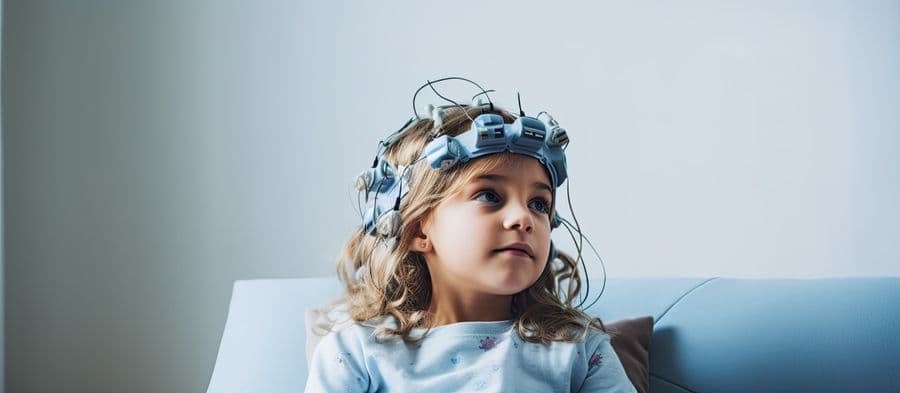
For many parents, neurofeedback is an attractive option because it does not involve giving medication. Children typically respond well to this form of therapy - sessions look like playing computer games, which facilitates cooperation and motivation. The child sits in front of a screen where a game is playing - but instead of a joystick, they steer with the activity of their brain. When the brainwaves reach the desired pattern, the character in the game speeds up or collects points. When attention drops - the game slows down.
Research conducted by the Gevensleben team demonstrated that children after neurofeedback training not only improved their scores on attention tests, but teachers and parents also noted improvement in daily functioning. This is significant, because improvement measured in the laboratory does not always translate to real change at home and school. Here, it did.
It is worth emphasizing that neurofeedback does not rule out pharmacotherapy. Many children use both methods simultaneously - medication provides immediate support, while neurofeedback works toward lasting change. Over time, in consultation with a psychiatrist, some patients reduce medication dosages.
Neurofeedback in Adults with ADHD
Adults with ADHD often do not receive a diagnosis until their thirties or forties - after years of struggling with difficulties at work, in relationships, and in organizing their lives. Neurofeedback can be an important element of their therapy, particularly in combination with psychoeducation and ADHD coaching.
In adults, training often focuses not only on attention but also on emotional regulation. Emotional dysregulation - the difficulty in controlling intense emotions, rapid shifts from enthusiasm to frustration - is one of the most burdensome aspects of ADHD in adults, and standard medications do not always adequately address it. Neurofeedback protocols based on alpha training can provide relief here.
Limitations of the Method
Neurofeedback is not a miracle cure. It requires time - the full cycle takes several months of regular visits. It requires commitment - one must attend sessions consistently. Not all patients experience the same degree of improvement - approximately 20-30% of individuals respond to training more weakly or more slowly.
It is also important that therapy is conducted by a qualified specialist who can select the appropriate protocol and adjust it during the course of therapy. Neurofeedback conducted improperly can not only fail to help but may reinforce undesirable brainwave patterns. Therefore, the choice of center and therapist matters.
Neurofeedback and Other Non-Pharmacological Methods for ADHD
Neurofeedback is not the only non-pharmacological intervention used for ADHD. It is worth knowing how it compares with other approaches. Cognitive Behavioral Therapy (CBT) is effective in working with adults with ADHD, particularly in the areas of organization, planning, and dealing with procrastination. Research shows that CBT and neurofeedback address different aspects of the problem - CBT works with behaviors and beliefs, neurofeedback with the neurophysiological substrate. Combining both methods produces a synergistic effect.
ADHD coaching focuses on practical strategies for daily functioning: how to plan, how to maintain routines, how to deal with chaos. It is not therapy in the traditional sense - it is practical support. Neurofeedback can make coaching more effective, because a brain that self-regulates better can more easily implement new habits.
Mindfulness training has a growing evidence base for ADHD. The study by Zylowska and colleagues from 2008 demonstrated that an 8-week Mindful Awareness Practices (MAPs) program improved attention and reduced ADHD symptoms in adults. Mindfulness and neurofeedback share a common denominator - both teach the brain better self-regulation - but neurofeedback does so more precisely, with immediate feedback based on objective EEG measurement.
Diet and supplementation are sometimes mentioned in the context of ADHD. Evidence for the effectiveness of eliminating artificial colorings and preservatives is moderate. Omega-3 fatty acid supplementation has some scientific support, but effect sizes are small. These approaches can be a complement, not a substitute, for more substantial interventions.
How to Prepare for Neurofeedback?
No special preparation is needed before the first training session. However, it is worth arriving well-rested - a brain that is extremely tired learns less effectively. It is better to avoid large doses of caffeine just before the session, because coffee changes the EEG profile and can interfere with training results. It is also worth having realistic expectations: neurofeedback is a process, not a one-time procedure. Effects build gradually, session by session.
For parents of children with ADHD: prepare your child for the fact that they will be playing computer games, but instead of a joystick, they will be using their brain. Most children treat this as fun, which is an enormous advantage - motivation and engagement increase when therapy is not associated with obligation.
Common Concerns of Adults with ADHD Before Neurofeedback
Adults with ADHD who are considering neurofeedback often have specific concerns stemming from the very nature of the disorder. I will not be able to attend regularly - this is a classic fear of someone with ADHD who has had lifelong difficulty maintaining routines. It is understandable, but it is worth knowing that regular neurofeedback sessions can themselves become a structure that helps organize the week. Many of our patients say that the fixed session times were one of the few consistent anchor points in their chaotic schedules.
I will not be able to sit still for 45 minutes - a neurofeedback session does not require absolute stillness. You need to stay seated, but you can settle comfortably in the chair, and the training itself looks like watching a movie or playing a game. Most adults with ADHD manage this without difficulty, particularly because the task engages attention - the brain works on solving a visual task, which paradoxically helps maintain calm.
I have tried many things already and nothing works - this is a common experience of adults with ADHD, especially those with a late diagnosis who spent years seeking help. Neurofeedback operates at a different level than coaching, organizers, or time management apps. It does not work with behaviors and habits, but with the neurophysiological substrate - with the brain activity itself. For many people, this is precisely the missing piece of the puzzle.
I cannot afford 30-40 sessions - this is a real concern, because costs can be significant. However, it is worth looking at this in perspective. A person with ADHD who loses productivity at work due to difficulties with concentration and organization, makes costly impulsive mistakes, and does not finish started projects - those costs accumulate over years and can far exceed the price of a neurofeedback cycle. Many practices offer discounted packages, and the effects - unlike medication - persist after therapy ends.
Neurofeedback for People with ADHD at Sztuka Harmonii
At Sztuka Harmonii Psychological Center, neurofeedback is part of a broader approach to working with ADHD. Julia Augustyniak, MA, an ADHD specialist, leads the diagnostic process and co-creates the therapeutic plan. Magdalena Raba, MA, oversees the overall care and coordinates collaboration between different forms of support - psychological consultations, coaching, and neurofeedback training.
If you have an ADHD diagnosis - or suspect you might have this disorder - and want to find out whether neurofeedback could help you, call 732 059 980 or schedule an initial consultation. During the first meeting, we will discuss your situation and together decide which therapeutic direction will be most beneficial.